My Blog List

Monday, August 27, 2012

Lilies, Glads and Magical Moments


My lilies were absolutely gorgeous this summer! I remembered to spray Bobbex on them regularly so the deer left them alone for the most part and they bloomed abundantly. :)


The Hollyhocks grew tall and stately as usually and looked quite stunning against the east side of the house.
They are at the end of their bloom now, though and I have clipped a number of them back already. (August 27, 2012)

 My Helianthus-false sunflowers along the side of the house are looking really good this year as well. They are in the same bed as the hollyhocks and clematises.


We have had a fair amount of rain this summer but it rarely comes from the east so that particular bed usually gets little rain. Since we put eaves up on that section of the roof 2 years ago, it doesn't get any run off from the roof anymore either. Clematises don't like to be dry and so I have put a soaker hose in that bed to ensure it gets enough water.  


Purple Monkshood, blue delphinium and the tail end of the red Maltese Cross

Maltese Cross

The perennials in my round Angel bed have done spectacularly well as usual. The Delphinuiums and the blue Monkshood grew tall and the red maltese Cross bloomed large to the delight of the hummingbirds. My pink Monkshood grew and bloomed more sparsely. It was overcrowded by my gigantic helianthus- false sunflower in the centre of that bed. 

(Note to self: Dig out more of the helianthus next spring to try and contain it better.)

My diligent husband dug around the long bed and added these beautiful stack stones around the sides.


The delphinuims in my long bed did not grow as well as they have in the past. I had dug most of them out this spring to get at the massive amount of long, endless grass roots in this bed. I guess the re-planting might have set them back somewhat.  Then 'something' kept eating away at the leaves and eventually most of the delphinium leaves were devoured. 

The Beer traps finally identified the culprits . Who knew that I had dozens and dozens of slugs eating their way through my flower beds! I have been emptying out the little tin beer bait traps almost daily and I have lost count of the numbers I have drowned, but I know it is close to 150! (I will never be able to eat or look at escargot ever again!)  
I really should not be surprised, since we had a rainy spring and relatively rainy first part of the summer, that plus the mulch around the perennial beds provides ideal living conditions and hiding places for slugs. 

Another note to Self:  Put out beer bait traps in June next year; not wait until August...

Brandy Wine rudbeckia and pink cinquefoil
Next Note to Self: Dig up sprawling cinquefoil perennial and move it to the wild bed by the road. It is very pretty but takes up a lot of room.

I like the 'Brandy wine' rudbeckias, but not quite as much as I loved the 'Autumn Colors' rudbeckias that I had last year and the year before...

My firebird dahlia is taller than ever this year and blooming beautifully in my birdhouse stackstone bed. The rose bushes have started to set some new buds and I am pleased to see that I seem to have contained the rust on them. :)

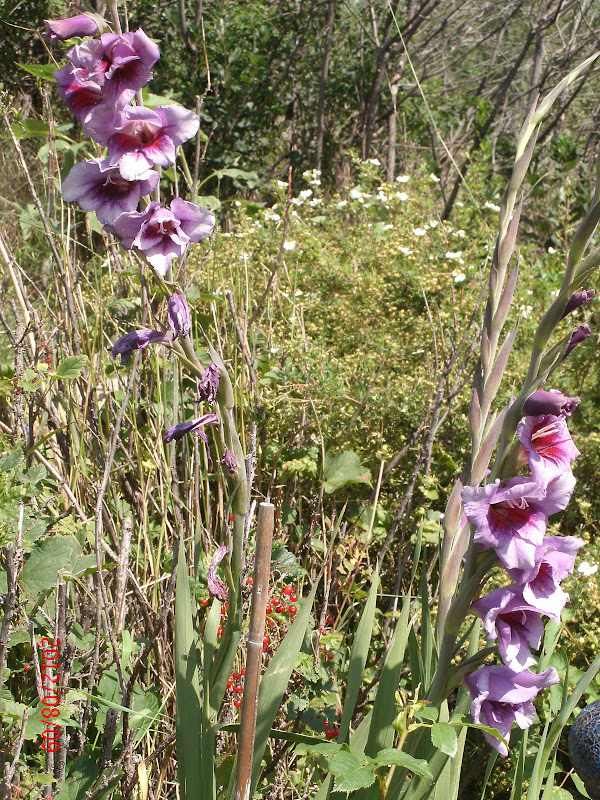
I am really impressed with the gladiolas in that bed. They are a gorgeous two tone deep purple and others are purple with silver lines along the edge. )I need to find the tags and write the names here.)

One morning recently, as I was admiring my flower beds from the deck, I saw a hummingbird dipping in and out of the delphinium flowers that had self-seeded in that bed. After a few sips, it continued on to  the glads and after that  the hummingbird had an uncharacteristic rest in the mostly bare branches of the chokecherry near the bird feeder where the chickadees usually hang out. 
I watched the hummingbird for 2 or 3 minutes and couldn't believe it was sitting still for that long! 

I debated with myself:
Do I run inside and grab my camera, or do I just stand here and enjoy the moment. Okay, I'll stay and enjoy the moment. When it continued to sit still on the branch, I finally dashed inside for the camera, but, of course when I reappeared,  the hummingbird was gone. It was quite a magical moment anyway. :)


Wednesday, August 15, 2012

Gladiolas, Delphiniums and (Ugh) Slugs

Gladiolas, Delphiniums and Slugs


Usually my garden looks its best in July and by August many of my perennials have finished blooming. This year is no exception, but the beautiful glads that have started blooming are sure a welcome addition! I bought 10 healthy fat bulbs at the Echo Glen Greenhouse booth at the Trade Show in town in April. I have found in the past that some of the glad bulbs that I planted did little more than grow tall nice looking leaves so I thought some of these might do the same. With that in mind I planted 5 of the tallest sprouts in my round Stack stone bed and the other 5 I planted in the centre of some of my deck pots instead of using a Spike. The ones on the deck have produced double  stems of flowers and the 2 bulbs in my tub at the bottom of the stairs have grown gigantic! (Likely thanks to the Miracle grow I was socking to the regal geraniums there.)


My poor delphiniums were not at their best this summer. I had dug most of them out of the long bed in the spring in order to clean up that bed, remove as much of the long grass roots growing rampantly there... That may have set the delphiniums back somewhat compared to last summer when they grew profusely, about 7 feet tall! Plus this year their leaves were decimated by some nasty garden insect or other. My poor lupines had their leaves ravaged, too and the marigold which I had planted in my triangular stack stone bed to replace the first eaten batch were also decimated. I guess I had other things on my mind this summer as I didn't clue in as to who/ what the culprits were.

I finally went online and Googled it... It was either a Earwigs or slugs. I decided that, yes, it could very likely be slugs since we have had problems with them before in the veg garden especially  among the lettuce. The slugs had the perfect hiding places under all the bark that I had added to mulch the flower beds. 

I took 4 empty cat food tins from our recycle bin and sunk them into 2 of my flower beds, then filled them with beer and water. In one night alone I caught over 60 slugs, drowned in the watery beer traps! Yay!!!


Yay, I won this battle!!!
I replenished the traps with fresh beer and had dozens more! I discovered quite a few slugs lurking under my garden statues waiting for the sun to start going down so they could continue their destruction! I squished a few, snipped a few with the garden shears, but that seemed to gross so I tossed the rest head first into the beer. I think I need to add a few more traps to one other bed as well.

And more importantly:  MAKE A NOTE IN MY GARDEN JOURNAL TO START SETTING OUT BEER TRAPS IN JUNE NEXT YEAR!!!  
Once the nesting song birds have raised their families and left our property, the slugs take over! (UGH!) Where are the hungry robins and house wrens when you need them?!

Okay let's end this post with a more palatable picture:

One of my favourite geraniums this year along with diamond frost Euphorbia and 'small leaf'
Another slug solution:
Add sliced cucumbers to an aluminum pie tin with some water. Apparently it creates some kind of electric shock when the slugs slide in. (Not tested yet.)

Add epsom salts around your plants ( Slugs don't like to crawl over salt). I tried this solution but of course it rained the very next day. The salt might not be good for a flower bed anyway...

Earwigs Bait:

Equal parts soy sauce, cooking oil, and corn syrup (or molasses). Cover 1/2 inch in bottom of container and sink container into the ground to brim. Cover partially to keep out the rain and to make it dark. I have not tried this solution either as I have not had an earwig problem (to my knowledge.)

Happy gardening! :D


Monday, July 23, 2012

Rose Rust Problem

Morden Centennial Rose earlier in July

We have a large number of wild roses on our properly, most of which have seeded themselves, but they were quite beautiful she they were in full bloom in early July! We have a huge rose problem this year, though. I noticed a lot of bright fluorescent splotches on the leaves and I Googled it on the computer to see if I could find out what it is. Apparently it is a type of Rose Rust fungus, not the usual under the leaf tiny spots, but a different variety. The splotches were also on my Morden rose bushes and even on some of the flower buds of my Morden Blush! We certainly are getting  a lot of rain this summer so I think that might be reason for the rust problem.

I pinched off or clipped off many of the affected leaves and buds. Then my husband and I trimmed many of the wild row bushes which are growing around the flower beds. We lugged the branches and leaves into the back of the truck where we took them to the burn pile at the county dump in rider not to spread the fungus.

Morden Sunrise had no rust thankfully but I sprayed it anyway

I bought a spray bottle of fungicide and sprayed all my domestic rose bushes as well as any nearby wild ones. Mother nature will have to take care of the wild roses that are affected in the environmental areas around our acreage and along the trail to the lake.  Many of them have dropped yellow leaves already (which are the result of the rust.)  The internet indicated that a sulphur based fungicide would do the trick or a product called Melobutanil. They bushes need to be sprayed in spring and summer particularly the lower leaves and branches. I will have to remember to diligently check the rose bushes and maybe spray them again in a couple of weeks and again in the spring.

My Morden roses were looking incredibly beautiful before this hail storm last Wednesday (July 18/ 2012). They had tall stems of multiple blossoms and I wish I would have gotten some photos before the hail! They lost most of the blossoms but they will likely recover, weather permitting.

Morden blush is always the first to bloom :)

Petunias looking good before the hail 

Lupines

Red cactus dahlia had just started blooming before the hail mashes part of it


New Additions

It's always exciting to add new additions to an existing flower bed!

We bought small Udo pear tree at the end of June at Home Hardware and we planted it next to the driveway near the telephone pole. We have an existing pear tree about 200 yards from there and it is always the first tree in the spring to sprout beautiful fragrant blossoms. It gets tiny hard green pears which don't amount to anything so I thought if we had a second pear tree to cross pollinate with it, maybe we would get some edible fruit??? It's too late for this year, but we'll see what happens next year. I hope they are not planted too far apart... it's worth a try!

Stack stone edging added around the long perennial bed

 Chris decided to edge my long perennial bed with the same stack stones as 2 of my other large beds to delineate the border and to keep out the long grass roots that always seems to find their way in.  He dug out a narrow trench of the clay soil and filled it in with gravel. Then he added a 1'by 4' inch board against the lawn to try and deter the lawn from encroaching. After that he put one layer of stones down around the long sides of the bed. (The steppingstone pathways are at either of the short sides.) It looks really nice! Then he added several bags of triple mix soil to top up the bed. Now I just need to go out and put the 2 bags of mulch on top of everything. :)


Maltese cross attracts hummingbirds


We planted new white peony shrub at the far end of that bed after removing a big clump of white daisies from there mixed with Jacob's Ladders that had all seeded themselves there. This peony was purchased at Wal Mart in Calgary and it had had 2 blossoms on it. I had Chris help me plant it in the hope  that it would break my 'Peony Curse' so it would bloom again next summer.

White peony Elegans at the far end of my long bed/ along with a self seeded lily  :)


(The peony diggings that I 'rescued' from shady parts of my wild bed and planted near the front of that bed have not bloomed yet. Neither has the one I put in my new triangular stack stone bed last summer, and not even the red peony that I had bought 3 years ago at PJ's Plantation!  It's quite disheartening!

At least 2 of the existing peonies in our yard did bloom this summer, although one peony had only one flower on it since it gets so little sun now because of the big trees. Sadly, the hail storm that we had on July 18th cut the flower bud off its stem and it did not get to bloom at all. :(

Some kind of insect has been eating all the leaves off of the marigold that I had planted in my triangle bed. It leaves the blossoms behind but without leaves the marigolds are all dying! I bought a small rectangular pot of new marigolds at the same Calgary Wal Mart and they are still on the deck waiting to go into the garden.

Thank goodness I didn't have time to plant them sooner! We had a terrible hail storm with high winds on Wednesday (July 18) and it shredded a lot of my flowers and veggies. What a mess to come home to! I have cleaned up some of the plants but there is still work to do...

Luckily I had not plant out my new Morden Centennial rose bush yet at that point! The rose bush was in a pot with what seems to be a type of sawdust mixture and the water ran right through the pot so it needed to be watered often. Probably an indication that it was root bound... It had set a lot of buds on its long spindly branches and it  had started blooming in the greenhouse.   I finally did plant it at the end of July in my long perennial bed at the end closest to the house where it continues to bloom.  :D


My new Peace rose is still in the greenhouse blooming its little heart out... The Peace rose has been  regularly giving me beautiful, tall, long stemmed flowers. The buds start out yellow but they soon turn pink as the petals unfold.  I have been cutting and bringing the flowers into the house.
The first Peace rose which I had brought in I had made the mistake of adding tap water to the vase. It turned the rose an ugly non-descript beige!  I think it's due to the high alkalinity in our well water. (A similar strange color change happens to red wine.) Now I remember to use bottled water in the rose vases.

I also planted a German Catchfly perennial in my triangular bed (also known as Lychnis Viscaria Splendins). It looks like it will bloom soon, so we'll see if it looks as good as the tag. :)


I love dahlias!

My new Kobold blanket flower bloomed well. This one is in the west side of my Angel bed

My red cactus dahlias continue the tradition of blooming profusely.

Monday, July 9, 2012

Dramatic Clematis and Calming Columbines

I love clematises!


Clematises are so spectacular and not that difficult to grow. My clematises are growing quite vigorously this summer, especially the General Sikorska clematis whichI have had for 5 years now.  My Jackmanii clematis  came into my garden in 2009.  to replace the pink Ville de Lyons,which died after only 2 years. The General had the first blossom pop out this summer on June 23rd and it full of blossoms now and is growing like crazy! Jack is blooming now, too, but only just started.

My tiny Alba Luxuriana clematis is still hanging in there, but doesn't seem to grow much from year to year.  (I guess it is not a good idea to 'rescue' stunted perennials.)  Maybe it needs some bone meal...  It does have some tiny buds for the very first time and hopefully (and we gardeners ARE the perpetual optimists) this summer it will grow bigger as well.


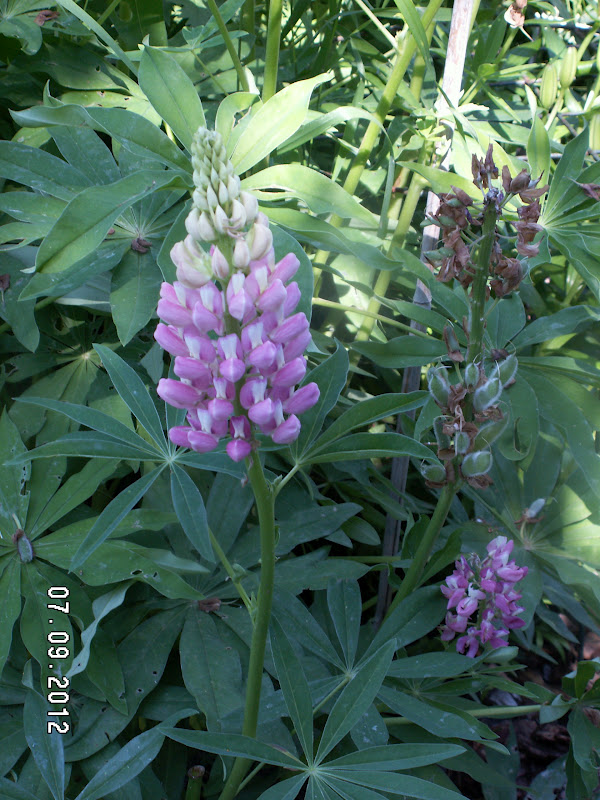
My pink lupins are beautiful!

Thrift

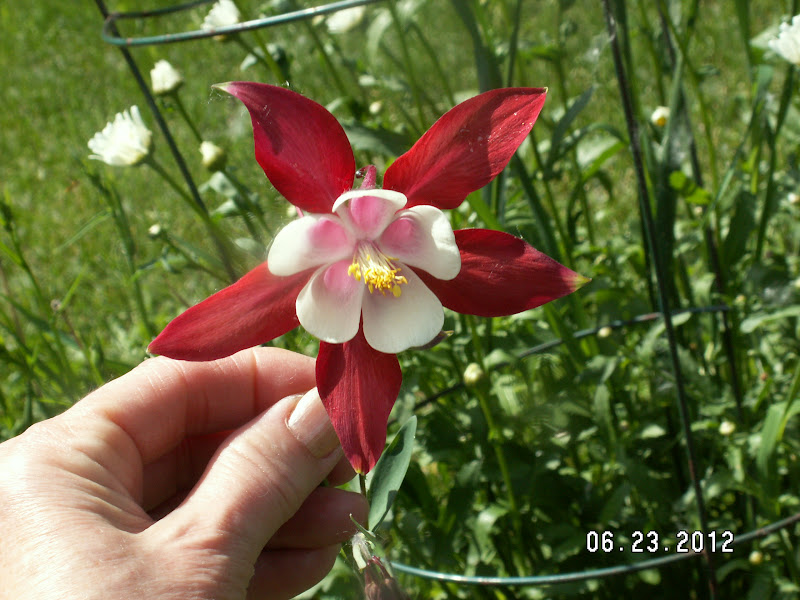
my old original Columbine

My new columbine ( Thanks Janet!  :)

Tree Swallow babies June 2012

Tree Swallow courting pair

Tree Swallow courting pair


The tree swallows arrived a few days early this spring, we were thrilled to see! We saw them for the first time this year on April 30 swooping around the yard calling to each other trying to find a mate.
A pair of swallows quickly chose the birdhouse which has the nest camera in it. It is situated not far from the kitchen door and the breakfast nook window. The swallows sat on top of it and claimed it as theirs. A pair of sparrows had already started building a nest there a few days earlier, and soon a fight ensued. The swallows came out victorious and the sparrows found themselves other accommodations.

 It was wonderful to wake up every morning to the sound of the male swallows singing to attract their mates. Many of the other birdhouses on our property were quickly snapped up by other swallows, sparrows, or house wrens and it was interesting to see the birds zigzagging around the yard picking up dried grass stems, twigs and feathers.

I had just clipped the 5 foot tall stems of last years Karl Forrester grass (calamagrostis) and it was still lying in a heap on the lawn waiting for me to take it to the compost. It became very popular with all the nest builders!  At one point I saw a small bird trying to fly with a very long grass stem in its mouth which I knew would never fit through the hole of a birdhouse. :)

Swallow male and female have selected a nesting site
The swallow pair soon started building a nest inside this birdhouse in the back yard with dry grasses and the coveted white feathers.
This pair truly outdid themselves this year! They laid 7 eggs and all 7 babies hatched successfully and fledged successfully! Mama and Papa Swallows were kept very busy feeding their brood and did a wonderful job of raising their family. :)


Female Swallow has completed her nest with some help from her mate.

The first egg was laid on May 23rd

2 eggs on May 24th


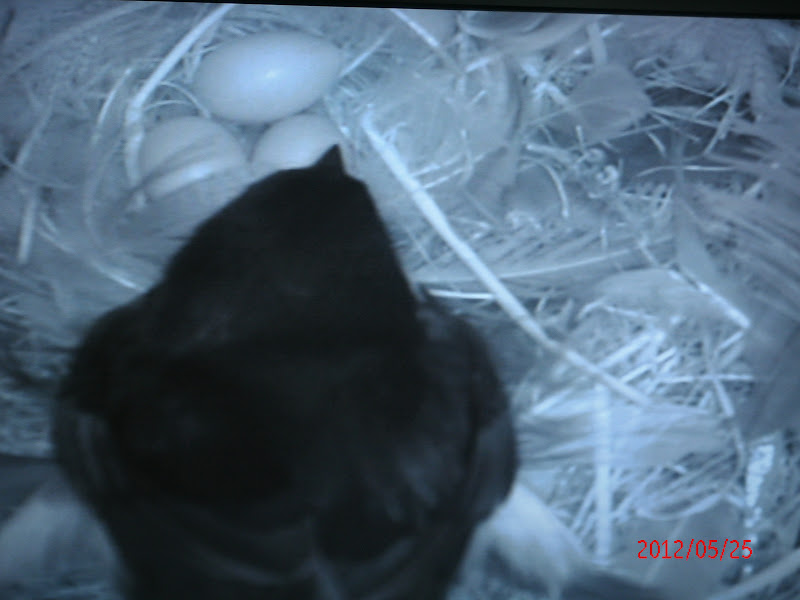
The mating and nest building takes about 3 weeks and Mama finally laid her first egg on May 23, then proceeded to lay one more egg each day until she had a total of 7 eggs on May 29th.  She started sitting on the eggs day and night once she had laid 3 eggs.  She seldom left the nest for very long while she was brooding unless the male came to relieve her and watch the eggs so she could go out and catch herself some insects. (Papa only sits near the eggs when its his turn, not on them like mama does. ) 


Papa checking out the 3 eggs- May 25/ 2012

4 eggs May 26

Proud Papa


When female swallows start brooding, they pluck their white breast feathers to line the nest, leaving a bare patch on their bellies called a brooding patch. They keep the eggs warm with this skin contact.


5 eggs May 27th

7 eggs by May 29th! :)

 The first babies started hatching about 2 weeks later on June 11th!


First baby is starting to hatch out. Proud parent looks on. :)


One egg remains unhatched

Proud parent checking the babies
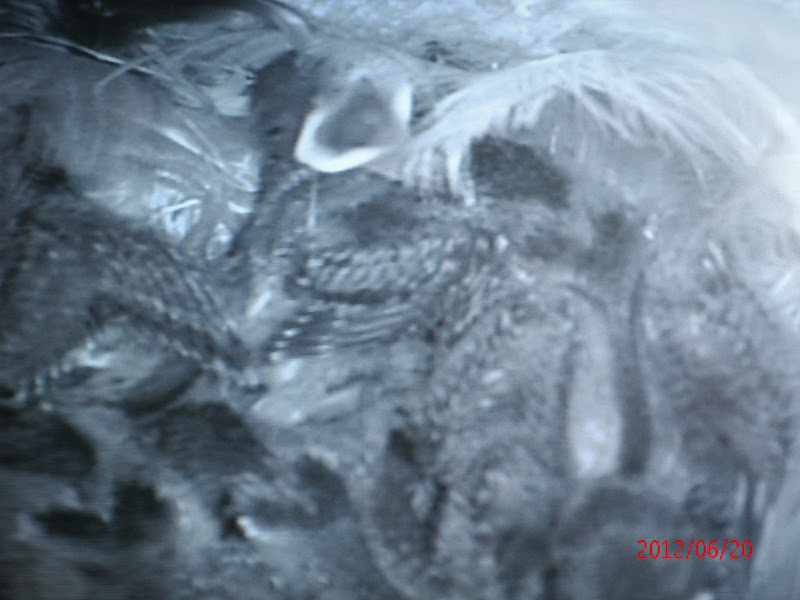
6 helpless, scrawny little hatchling tree swallows


June 12, 2012 1 day old baby tree swallows in their nest


The last egg finally did hatch on either June 12 or 13th


The 7th egg finally did hatch sometime later likely June 12, but we did not know this for several days. We could see that the egg was gone, but the nest camera did not show all 7 youngsters for over a week. They were very hard to differentiate at first. 

8 day old baby swallows


It doesn't take long for the babies to grow and start to get feathers. Here they are already  8 days old.


The videos give such a good depiction of the feeding process in the nest, but unfortunately they dan't work on this blog for some reason....  Mama Swallow is the best feeder of the 2 parents. She usually brings a big mouthful of insects and feeds 2 or 3 babies at each go. Papa only brings enough to feed one baby at a time.

(It was also interesting to see that 3 of the young were quite a bit bigger than their siblings, yet they all usually leave the nest on the same day, regardless.)

At around 7 days of age the babies start to flex their wings and flap them rapidly to exercise their muscles in preparation for flight.

The swallow parents were very dedicated to their family's safely as well. They seldom left the babies unattended for more than a few short minutes, usually taking turns sitting with their babies while the other parent went hunting. This ensures that no other birds will try and take over the nest location. (Last year we witnessed 2 nest takeover attempts by another swallow the day after the babies were hatched!)


Adult swallow on left feeds one baby then leaves. Babies are 14 days old


The swallow babies become curious about the outside world at about 2 weeks of age and they start to look out of the birdhouse hole to the big world outside.

June 29 the babies are 18 days old


The babies are ready to leave the nest after about 2 1/2 weeks of age. Other adult swallows seem to sense that the babies are getting ready to leave the nest.  On June 29, along with Mama and Papa, there were 8 or more swallows swooping around the birdhouse, sometimes clinging onto the side as the babies peeked out. They seemed to be giving them encouragement, flight demonstrations, or maybe a 'pep talk' to try to entice them to leave their nest. This went on for several days.

Once the first baby gets the courage to leave, the rest of them follow suit within a few hours after, usually one every hour or hour and a half. By the end of the day, the nest is empty; such a bitter sweet sight in the nest camera! The babies are gone, and there's nothing to see but a flattened, dirty pile of grasses and feathers.
But the knowledge that there are 7 new swallows are out in the world doing their part to eradicate insects is sweet.


Happy Trails, little ones!  :)